
In partnership with

DEAR READER,
American envoys have been travelling between Abu Dhabi, Moscow and Dublin in an effort to revive negotiations over Russia's war against Ukraine. But with Moscow unwilling to compromise on its territorial demands, how much progress has actually been made? Aleksandre Nozadze takes a closer look at the latest diplomatic efforts, the positions of the parties involved and what they could mean for the future of European security.
Enjoy reading this week's “brief”!
— Giorgi Beroshvili, Editor

TOP STORIES OF THE WEEK
🇵🇱 Poland suspends contributions to allied weapons fund for Ukraine amid high domestic defence spending. Polish Prime Minister Donald Tusk announced following the European Union summit in Dublin that Warsaw will temporarily cease funding the Prioritised Ukraine Requirements List, a programme enabling NATO allies to purchase American weapons for Kyiv. Tusk informed NATO Secretary General Mark Rutte that Poland cannot currently contribute due to a severe national budget deficit and the necessity of prioritising its own record-high domestic military expenditures. Despite the multilateral funding suspension, Warsaw continues to provide direct bilateral military assistance. On 30 October, the Ukrainian Foreign Ministry confirmed that Poland is preparing to transfer two Soviet-made MiG-29 fighter jets to Ukraine. In exchange, Kyiv agreed to share advanced counter-drone technology with Warsaw, culminating in a 10 November bilateral agreement to establish joint working groups focused on developing drone and counter-drone systems.
🇭🇺 New Hungarian government pledges to ratify European treaty combating violence against women. Hungarian Prime Minister Péter Magyar announced on 12 November that his government intends to ratify the Council of Europe’s Istanbul Convention on preventing and combating violence against women and domestic violence. The ratification pledge is part of a comprehensive legislative package designed to strengthen protections for women and girls, which includes criminalising the misuse of intimate images, strengthening the enforcement of restraining orders, and providing special protections for survivors in criminal proceedings. Furthermore, the government plans to eliminate the prescription requirement for emergency contraception and abolish the controversial "heartbeat decree" that previously forced women seeking abortions to listen to fetal cardiac activity. The move marks a stark reversal from 2020, when the parliament (then controlled by Viktor Orbán’s Fidesz/KDNP coalition) blocked an earlier effort to ratify the binding international treaty.
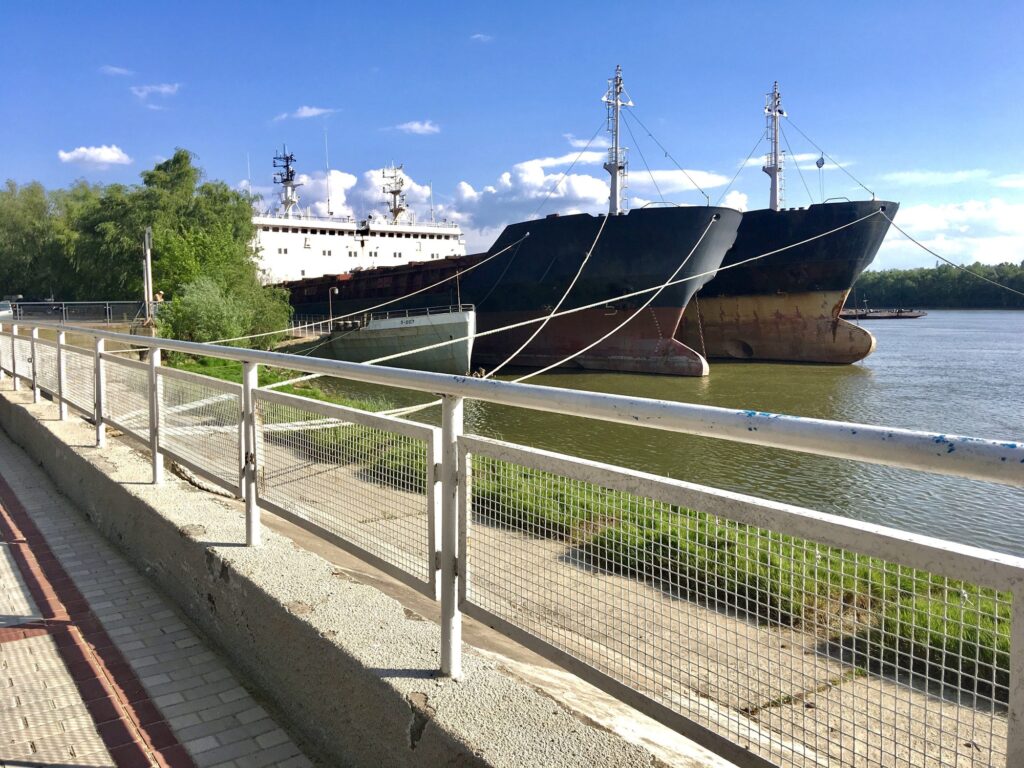
🇷🇴 Romania demands allied support following unprecedented drone strikes on Black Sea shipping. Romania's Defence Ministry reported that three commercial vessels were struck overnight by unidentified drones in the Black Sea, prompting Bucharest to scramble F-16 fighter jets and issue coastal threat warnings. According to the ministry, the Greek-flagged oil tanker Evia Petrol V, the Marsol, and the Ali Najafov all sustained strikes, though ship crews successfully extinguished the resulting fires with no reported casualties. The overnight swarm follows a Friday drone strike on the commercial ship Larissa 1 near the Romanian coast. Romanian Defence Minister Ștefan-Radu Oprea condemned the attacks as unacceptable and demanded immediate solidarity from NATO allies, calling for additional surveillance aircraft and defensive equipment. The strikes mark a severe escalation in Black Sea maritime security, following an October wave of drone attacks near Romanian and Bulgarian waters that left over 20 sailors dead or missing.
🇪🇪 Estonia closes Russian border following GRU-directed arson attack on defence facility. Estonian Prime Minister Kristen Michal announced that Tallinn will indefinitely close its border crossings with Russia beginning 1 December in response to a foiled arson attack orchestrated by Russian military intelligence (GRU). Authorities detained eight individuals attempting to set fire to a defence technology company overnight on Saturday; no injuries were reported. Michal stated the border closure is necessary to reduce the threat of further hybrid operations, noting that Russian intelligence explicitly exploits border crossings to exert influence. Estonian Foreign Minister Margus Tsahkna called the sabotage an escalation of hostile activities extending beyond Ukraine, anticipating further European Union sanctions against Russian entities. Ukrainian Foreign Minister Andrii Sybiha praised Estonia's decisive action, urging the rest of Europe to implement tangible consequences for Russian sabotage rather than relying solely on diplomatic condemnation.
🇦🇱 Albanian Prime Minister concedes Tirana will likely not host 2027 NATO summit. Following pushback from alliance diplomats over low defence spending and geopolitical uncertainties, Albanian Prime Minister Edi Rama has ruled out hosting the 2027 NATO summit. Speaking ahead of the European Political Community meeting in Dublin, Rama conceded that a common position on timing has not been reached, though he insisted Tirana will host the gathering if it occurs in 2028. The admission reverses earlier confidence from Defence Minister Ermal Nufi, who suggested Albania was prepared to host the summit in 2027, 2028, or even virtually. The delay reflects broader alliance hesitancy to commit to the 2027 timeline amid concerns over rising costs and the risk of handing United States President Donald Trump an opportunity to criticise NATO.
🇦🇿 / 🇬🇧 United Kingdom signs strategic partnership with Azerbaijan. UK Prime Minister Andy Burnham and Azerbaijani President Ilham Aliyev signed an agreement elevating bilateral relations to a "strategic partnership" on Thursday during the European Political Community summit in Dublin. The joint declaration outlines expanded cooperation in defence, law enforcement, border management, renewable energy, and digital governance. However, the signing occurred just hours after a Baku Grave Crimes Court sentenced independent journalist Imran Aliyev to 10 years in prison and civic activist Elgiz Gahraman to nine years on charges of smuggling and money laundering. Imran Aliyev, head of the parliamentary monitoring platform Meclis.info, maintains the charges were fabricated in retaliation for his investigative work. International human rights organisations note that over 300 independent journalists, activists, and academics currently remain imprisoned in Azerbaijan on politically motivated charges.
A MESSAGE FROM OUR SPONSOR
You know the problem. Now build the fix.

You've spent years close to a broken industry or process. You know exactly what would fix it. But you’ve never had the time or resources to make it happen.
With Lovable, your expertise is all you need. Describe the solution to your problem — a website, a dashboard, an internal tool — and get professional-grade software back. You make every call on how it works, because you're the one who knows what it needs to do.
Start today and take $5 off your first month.
Discount of $5 applies to first month of any paid plan. You need to sign up via this webpage in order to claim the discount. The discount applies to new and returning users without an active paid plan. Terms apply.
EXPERT OPINION
Peace negotiations continue

Following a nine-month hiatus in formal trilateral diplomacy, the United States, Ukraine, and Russia completed a high-stakes week of shuttle negotiations spanning Abu Dhabi, Moscow, and Dublin between 10 and 13 November. The third round of US-mediated talks in the United Arab Emirates resumed a process that had stalled after initial sessions in January and February 2026 were interrupted by the outbreak of the US-Iran war. Momentum returned in late October and early November through a series of preparatory steps, including US envoy Steve Witkoff's late October meeting with Russian President Vladimir Putin in St Petersburg, a six-day humanitarian truce and civilian evacuation in occupied Oleshky brokered by US First Lady Melania Trump, and a 5 November coordination meeting in Brussels among American, Ukrainian, European, and NATO officials.
Convening in Abu Dhabi on 10 and 11 November, the trilateral delegations were led by US presidential envoys Steve Witkoff and Jared Kushner, Ukrainian Foreign Intelligence Service chief Rustem Umerov (accompanied by Presidential Office Chief Kyrylo Budanov, parliamentary faction leader Davyd Arakhamia, and First Deputy Head of the Presidential Office Serhii Kyslytsia), and Russian presidential aide Vladimir Medinsky (joined by military intelligence chief Igor Kostyukov and Kremlin envoy Kirill Dmitriev). While the two-day talks yielded no breakthrough on a ceasefire, both sides agreed in principle to conduct the largest prisoner-of-war exchange since the start of the full-scale invasion. Politically, Russia maintained its maximalist demands, with Medinsky reiterating claims to the entirety of the Donetsk, Luhansk, Zaporizhzhia, and Kherson regions while seeking to subordinate a Ukrainian settlement to a broader overhaul of the post-Cold War European security architecture, including rolling NATO infrastructure back to its 1997 borders.
Immediately after the Abu Dhabi sessions concluded, Witkoff and Kushner flew to Moscow on the morning of 12 November for direct talks with President Putin at the Kremlin. During the afternoon meeting, Putin refused to soften his territorial demands, rejected proposed demilitarised zones, and ruled out Western peacekeeping forces in post-war Ukraine. However, Kremlin foreign policy aide Yuri Ushakov stated that Moscow is prepared to immediately begin negotiations "in tandem" with Washington on the parameters of a new European security framework. Crucially, the Kremlin summit produced an agreement to hold a subsequent round of peace negotiations that will expand the trilateral format to include European representatives alongside the United States, Ukraine, and Russia.
From Moscow, Witkoff and Kushner travelled directly to Ireland on the evening of 12 November to meet Ukrainian President Volodymyr Zelensky and Umerov at Casement Aerodrome in Baldonnel, outside Dublin, where Zelensky was attending the European Political Community summit and an informal gathering of European Union leaders. Briefing reporters alongside the American envoys, Zelensky confirmed that intelligence services and Human Rights Ombudsman Dmytro Lubinets are preparing the largest prisoner swap of the war, expected to return between 1,000 and 1,500 captives from each side within two to three weeks. While welcoming the humanitarian outcome and Europe's inclusion at the negotiating table, Zelensky disclosed that US negotiators had inquired whether Kyiv would cede the remaining Ukrainian-held parts of Donbas in exchange for NATO membership, and warned European leaders against allowing Moscow to open discussions on revising Europe's security architecture before a ceasefire is secured.
Addressing concerns that the continent could be sidelined by a bilateral US-Russian bargain, EU leaders met in Dublin on 13 November to finalise Europe's representation for the upcoming multilateral talks. Rejecting earlier proposals by Italian Prime Minister Giorgia Meloni to appoint a single special envoy, a decision that also bypassed a bid by EU foreign policy chief Kaja Kallas, leaders agreed to establish a collective negotiating team. Announced by European Council President António Costa following overnight consultations with Zelensky, Witkoff, and Kushner, Europe's delegation will comprise the European Union institutions (the European Council and European Commission) alongside the "E5" group of major European military powers: France, Germany, Italy, Poland, and the United Kingdom, represented by their national security advisers. Costa emphasised that while only Ukraine holds the legitimacy to decide on territorial and sovereignty questions, EU institutions will handle negotiations on Ukrainian EU accession, reconstruction, and economic recovery, while the E5 and the "Coalition of the Willing" will coordinate post-war security guarantees in partnership with NATO.
— Aleksandre Nozadze, MA Candidate in International Security and Development, Jagiellonian University, NAWA Banach Scholar
ARTICLES OF THE WEEK
CARTOON OF THE WEEK

Do you want to see more of Andrzej’s drawings? Check out our dedicated gallery page featuring his cartoons here.