
In partnership with

DEAR READER,
This week, we’re diving into the Bucharest Nine summit. Ana Pisarenco breaks down what actually came out of the meeting, why Eastern Europe is pushing for a stronger NATO posture, and what it all means as regional tensions continue to rise.
We are thrilled to share that for the third consecutive year, our podcast has been shortlisted for the prestigious Publisher Podcast Awards in the "Best News and Analysis" category. Additionally, we've just launched a YouTube channel for our podcast — be sure to check it out and subscribe!
Enjoy reading this week’s “brief”!
— Giorgi Beroshvili, Editor

TOP STORIES OF THE WEEK
🇱🇻 Latvian government collapses over Ukrainian drones. Latvian Prime Minister Evika Siliņa has resigned after her three-party coalition fractured. The collapse was triggered by Siliņa’s decision to fire Defense Minister Andris Sprūds following a May 7 incident where two stray Ukrainian drones crossed from Russia and struck a fuel depot in eastern Latvia. The drones were deliberately diverted by Russian electronic warfare, according to Kyiv. In retaliation for Sprūds’ firing, his left-leaning Progressives party withdrew their support, causing Siliņa’s center-right New Unity party to lose its parliamentary majority. Consultations have begun to form a transitional government ahead of scheduled parliamentary elections in October 2026.
🇧🇬 Bulgaria wins Eurovision 2026. Bulgarian pop star Dara won the 2026 Eurovision Song Contest in Vienna with her dance anthem “Bangaranga”, securing the country’s first-ever victory. Bulgaria won both the jury and public votes, with Israel in second place and Romania in third. The run-up to the final was marked by political tension, with protests and five countries boycotting over Israel’s participation, though the Grand Final proceeded without major disruptions.
🇷🇺 Russia eases citizenship rules for Moldova’s Transnistrian region. On May 15, Russian President Vladimir Putin signed a decree introducing a simplified process for residents of Moldova’s breakaway region Transnistria to obtain Russian citizenship. The decree fast-tracks applications for permanent residents over 18, waiving standard requirements such as five years of residency in Russia, language proficiency, and knowledge of Russian history and law. Moldovan President Maia Sandu strongly condemned the decree, dismissing Moscow’s claim that it was passed to “protect human rights” and arguing instead that the Kremlin is seeking a new mobilization resource to conscript troops for its war in Ukraine.
🇺🇸 / 🇵🇱 US troop halt rattles allies. A last-minute Pentagon decision to cancel the deployment of 4,000 US troops to Poland has sparked concern among NATO members, and raised new questions about Washington’s long-term military commitment to Europe. The move, reportedly ordered by US Defense Secretary Pete Hegseth, came as troops and equipment had already begun arriving in Poland for a planned nine-month NATO rotation. Officials on both sides of the Atlantic were caught off guard, with reports suggesting even Pentagon staff had little warning. The decision follows an earlier announcement that the US would withdraw 5,000 troops from Germany, reinforcing fears that the Trump administration is serious about reducing America’s military footprint in Europe. Security experts warned the cancellation could weaken deterrence against Russia and unsettle allies on NATO’s eastern flank.
EXPERT OPINION
The Eastern Flank is moving closer to Europe’s centre

While NATO leaders spoke inside Bucharest’s Cotroceni Palace this week about deterrence, military readiness and Europe’s long-term security, Moldovan authorities were tracking a Russian drone moving south across the country towards the Romanian border. At roughly the same time, a civilian aircraft carrying passengers from Sharm el-Sheikh was approaching Chișinău.
Inside the summit halls, leaders debated the future shape of Europe’s eastern flank. Outside them, the war was already passing across Moldova’s skies. That contrast captured one of the clearest shifts emerging from this year’s Bucharest Nine summit. Eastern Europe is beginning to speak less like NATO’s frontier and more like one of the places where Europe’s future security order is being defined.
Hosted by Romanian President Nicușor Dan, the summit brought together leaders from NATO’s eastern member states alongside Nordic allies, NATO Secretary General Mark Rutte and Ukrainian President Volodymyr Zelenskyy ahead of July’s NATO summit in Ankara.
The discussions focused heavily on military production, industrial capacity and long-term support for Ukraine. The summit also revealed how Romania now sees its role inside the region.
On the eve of the meeting, Dan argued that political debate surrounding Ukraine and Russia’s war had reached its limits. He criticized what he described as a tendency among politicians to remain trapped inside familiar narratives that reassure existing audiences rather than persuade wider societies. Public language around the war, he suggested, often stays carefully aligned with existing electorates instead of reflecting the scale of the moment.
A day later, Romania offered the Bucharest summit itself as a platform for Ukraine’s wider diplomatic and strategic messaging. At Cotroceni Palace, Zelenskyy used the gathering to push once again for sustained European support as the war enters another difficult phase. Alongside Lithuanian President Gitanas Nausėda, he signed a new agreement on defence industry cooperation, underscoring how military production has moved to the centre of Europe’s long-term calculations about the war.
Zelenskyy also announced that a Romania-Ukraine agreement on countering drones would be finalized “soon”, while Dan publicly acknowledged Romania’s interest in Ukrainian expertise developed during more than three years of full-scale war.
The symbolism extended beyond formal diplomacy. As political leaders discussed deterrence and military coordination inside the presidential palace, Mirabela Grădinaru, the partner of the Romanian president, appeared alongside Olena Zelenska in a series of public engagements linked to civil society and social causes. The moment added another layer to the summit’s message. Support for Ukraine now extends beyond military and political structures into the language of civic solidarity, public diplomacy and societal resilience.
That broader shift remained visible throughout the summit itself. For years, Romania largely framed Moldova through the language of historical ties, European integration and cultural proximity. Since Russia’s full-scale invasion of Ukraine, however, Bucharest has described Moldova more openly through the language of regional security.
Moldova now appears regularly in Romanian political discourse alongside concerns about cyber pressure, Russian influence operations, disinformation campaigns and the militarization of the Black Sea region. The change reflects how dramatically Europe’s security geography has evolved since Russia’s annexation of Crimea in 2014 and especially since the invasion of Ukraine in 2022.
The Bucharest Nine format, often referred to as B9, was created by Romania and Poland after Crimea’s annexation as a platform for NATO’s eastern members to coordinate security priorities. At the time, discussions centred largely on reassurance measures and allied troop presence. Today, the language is sharper and the stakes are greater.
Conversations revolve around ammunition production, air defence systems, industrial capacity and the prospect of a prolonged confrontation between Russia and the West. Eastern European states speak less like countries waiting for reassurance from NATO’s political core and more like governments attempting to shape the alliance’s strategic direction themselves.
Polish President Karol Nawrocki captured that shift directly when he argued that the Eastern Flank should be viewed as one of NATO’s centres of gravity rather than its distant periphery. The inclusion of Nordic allies reinforced that transformation. Security discussions that once focused primarily on the Baltic region now stretch from the Arctic to the Black Sea, linking northern Europe far more closely to developments around Ukraine and Moldova. Rutte described the gathering as proof of allied unity “from the Black Sea to the Arctic”.
For Romania, the summit carried significance well beyond alliance coordination. Bucharest now presents the Black Sea as one of Europe’s central strategic corridors – militarily, economically and politically. That framing also explains why Moldova featured so prominently throughout the discussions despite remaining outside NATO itself.
The war has made it more difficult for Moldova to separate from the wider instability surrounding Ukraine. Russian drones and missiles cross Moldovan airspace repeatedly. Debris from Russian strikes has landed on Moldovan territory several times during the past two years. Concerns surrounding disinformation and political destabilization have intensified ahead of Moldova’s parliamentary elections last year.
Against that backdrop, the drone incident unfolding during the summit carried symbolic weight beyond the immediate security breach. Even if the episode quickly disappeared beneath Moldova’s daily political noise, it illustrated how physically close the war now sits to both NATO territory and the EU.
For years, much of Western Europe discussed the east as a vulnerable frontier requiring reassurance from the continent’s political centre. The rhetoric emerging from Bucharest suggests the tone is changing. What once looked like Europe’s outer frontier now appears far closer to its strategic centre. And while leaders gathered in Bucharest to discuss the future of the Alliance, the war itself was already moving across Moldova’s skies.
— Ana Pisarenco, founder of the eurOpinii Podcast

As a member of New Eastern Europe, you will enjoy unlimited access to premium articles, our full archive, downloadable PDF issues, and our podcast. Choose digital-only or add print delivery, and join a community that values independent, in-depth analysis.
OPPORTUNITY OF THE WEEK
European Union Institute for Security Studies (EUISS) — EUISS Traineeship Programme 2026–2027 — A 10-month traineeship programme for university graduates and young professionals seeking experience in EU foreign, security, and defence policy research. Running from 16 September 2026 to 15 July 2027, the programme offers nine trainee positions across portfolios including Asia and Global China, Cyber and Digital Technologies, European Defence Policy, Indo-Pacific, Russia and the Eastern Neighbourhood, Sub-Saharan Africa, Transnational Security, and the EUISS Director’s Office. Trainees will contribute to policy-oriented research, event organisation, outreach activities, and analytical projects while working closely with EUISS analysts in Paris or Brussels. Open to EU citizens with a Master’s degree in political science, international relations, economics, or related fields. Monthly grants range from €1,597 to €1,798 depending on location. Application deadline: 31 May 2026.
ARTICLES OF THE WEEK


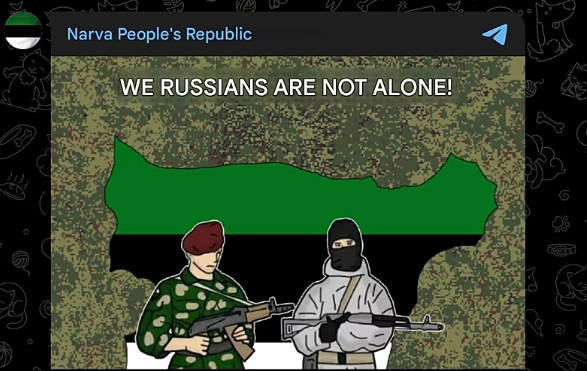
CARTOON OF THE WEEK

Do you want to see more of Andrzej’s drawings? Check out our dedicated gallery page featuring his cartoons here.