
In partnership with

DEAR READER,
March 25th will mark Freedom Day for Belarusians. Following the recent release of political prisoners by Alyaksandr Lukashenka, we are taking a closer look at what’s really behind the move, what Belarus stands to gain, and what it actually means for those fighting for a free Belarus.
On our side, we have hit an important milestone: $10,000 raised in our fundraiser. A huge thank you to everyone who contributed, your support keeps this work going. And one more thing: Talk Eastern Europe is now on YouTube. Come find us there and hit subscribe!
Enjoy reading this week’s “brief”!
— Giorgi Beroshvili, Editor

TOP STORIES OF THE WEEK
🇨🇿 Massive anti-government protests in Prague. On March 21, an estimated 250,000 people gathered in Prague’s Letná district for the largest anti-government demonstration in the country since 2019. The rally, organized by the pro-democracy group Million Moments for Democracy, targeted the administration of Prime Minister Andrej Babiš and his populist ANO party, which since December 2025 leads a coalition with right-wing and far-right elements. Protests came amid the defense spending cuts and fears over a shrinking of independent media through new financing plans and tightening disclosure rules for NGOs.
🇸🇮 Slovenia’s liberals narrowly win elections. Prime Minister Robert Golob’s liberal Freedom Movement narrowly defeated the right-wing populist Slovenian Democratic Party (SDS) on March 22. Golob’s party secured 28.6% of the vote against 28% for former Prime Minister Janez Janša. The nearly even result means that the final government will be determined by coalition talks among seven parties. The election campaign was marred by controversy, as Slovenian authorities alleged that an Israeli private intelligence firm carried out illegal wiretapping to target the government. While Janša admitted to contacting a figure linked to the firm, he denied allegations of election interference.
🇭🇺 Hungarian Foreign Minister allegedly briefed Russia on EU meetings. A report from The Washington Post, cites an unnamed EU security official, who alleges that for years Hungary’s Foreign Minister Péter Szijjártó has been providing live reports to his Russian counterpart, Sergey Lavrov, during breaks in confidential EU Council meetings. These real-time updates reportedly included details of sensitive discussions. Moreover, the report claims that Russian hackers have also had access to sensitive material through the Hungarian Foreign Ministry’s computer networks. The Washington Post has also uncovered a Russian intelligence proposal codenamed “the Gamechanger”. The plan suggested staging a fake assassination attempt on Prime Minister Viktor Orbán to boost falling poll numbers, as the latest opinion polls show the opposition Tisza party leading by 14 percentage points ahead of Hungary’s April 12 elections. Tisza leader Péter Magyar denounced the revelations as “outright treason,” while the Kremlin dismissed the report as disinformation.
🇷🇺 / 🇲🇩 Oil spill in Moldova. Russian attacks on Ukrainian energy infrastructure have caused an emergency in neighbouring Moldova, as oil leaked into the Nistru River, flowing downstream and contaminating the primary water source for much of the country’s northeast. The city of Bălți and several northern districts were forced to cut off drinking water entirely, as the government approved a two-week state of alert to manage the leak. The crisis is now threatening Chișinău, which relies on the river for 98% of its water supply. Following the incident, Moldova’s Ministry of Foreign Affairs summoned the Russian Ambassador-Designate to formally condemn the strike, reportedly presenting him with a bottle of oily water taken directly from the river.
🇰🇿 Kazakhstan approves new constitution. Voters in Kazakhstan overwhelmingly backed the approval of a new constitution in a snap referendum held on March 15. According to preliminary results, 87% of voters supported the document with a turnout of 73%. The new constitution introduces several large-scale reforms, such as replacing the bicameral legislature with a unicameral parliament and recreating the office of Vice President, a position abolished in 1996. President Kassym-Jomart Tokayev praised the result, arguing that the changes are essential for his modernization agenda. However, analysts suggest these changes may serve a dual purpose: either providing Tokayev with a legal reset to circumvent his 2029 term limit or allowing him to appoint a hand-picked successor. Tokayev dismissed these concerns, insisting that the 2029 election schedule remains unchanged.
A MESSAGE FROM OUR PARTNER
Wake up to better business news

Some business news reads like a lullaby.
Morning Brew is the opposite.
A free daily newsletter that breaks down what’s happening in business and culture — clearly, quickly, and with enough personality to keep things interesting.
Each morning brings a sharp, easy-to-read rundown of what matters, why it matters, and what it means to you. Plus, there’s daily brain games everyone’s playing.
Business news, minus the snooze. Read by over 4 million people every morning.
EXPERT OPINION

Belarusian authorities released 250 prisoners on March 19th, including prominent human rights defenders Marfa Rabkova, who faced 15 years on extremism charges after five years imprisonment, alongside Nasta Loika and Valiantsin Stefanovich. While most freed individuals remained in Belarus, at least 15 were transferred to Lithuania accompanied by a US delegation.
Those released had been imprisoned under politically motivated charges, retaliation for professional activities including human rights work or participation in protests following the disputed 2020 presidential election that triggered large-scale demonstrations and subsequent mass arrests.
This release followed negotiations with the US, leading to eased sanctions targeting Belarusian financial institutions and key export sectors. As Belarus attempts improving US relations, this marks the second major prisoner release following American engagement. In December 2025, authoritarian leader Alexander Lukashenka's government released 123 political prisoners after meetings with the US envoy, including Nobel Peace laureate Ales Bialiatski, who spent decades campaigning for those imprisoned for political beliefs.
With the total tally of released political prisoners increasing, US envoy John Coale stated he expected all remaining political prisoners (approximately 1,100 according to Tsikhanouskaya's office) released before year's end, Reuters reported.
During the visit, the US envoy and Lukashenka also discussed possibilities for Lukashenka's US visit, representing a potential breakthrough for Belarus. Coale indicated discussions covered potential reopening of the US embassy in Minsk, which Washington closed after Belarus allowed Russia to launch its 2022 Ukraine invasion from Belarusian territory.
Using prisoner releases as bargaining chips has drawn Western criticism. Amnesty International's Eastern Europe and Central Asia director stated: "While the release of hundreds of individuals unjustly detained on politically motivated charges is a welcome step, it must not be mistaken for justice. Freedom should never be the product of geopolitical bargaining in human beings. Justice will not be served until those responsible for their unlawful imprisonment are held accountable."
Nevertheless, cooperation between the two countries is clearly expanding.
On March 25th, Belarusians will celebrate Freedom Day. Tsikhanouskaya published a statement calling on supporters to participate through various solidarity actions: voicing support via statements, tweets, and posts using #StandWithBelarus; displaying the national white-red-white Belarusian flag through banners, posters, or hashtags in public spaces; organizing discussions, seminars, exhibitions, cultural events, and film screenings on Belarus; and joining or organizing solidarity rallies with Belarusians abroad.
These transactional releases show that Belarus is willing to leverage human rights as diplomatic currency in pursuit of sanction relief and international legitimacy, particularly from the Trump administration seeking regional engagement. However, these releases do not address systemic repression mechanisms or accountability for those responsible for arbitrary detentions. Thus, the Western communities are faced with a dilemma: welcoming individuals who were released while acknowledging that they perpetuate a framework where fundamental freedoms become bargaining, negotiating commodities. This exact approach can be replicated by other authoritarian leaders from the region.
— Giorgi Beroshvili, Editor

As a member of New Eastern Europe, you will enjoy unlimited access to premium articles, our full archive, downloadable PDF issues, and our podcast. Choose digital-only or add print delivery, and join a community that values independent, in-depth analysis.
OPPORTUNITY OF THE WEEK
Asia Global Institute — Asia Global Fellowship Program (2026) — A highly selective fellowship for mid-career professionals worldwide working across policy, politics, civil society, and business with a focus on Asia-Pacific issues. The programme brings together leaders with 8–25 years of experience to deepen their understanding of regional dynamics, engage in policy-relevant dialogue, and strengthen their ability to address complex global challenges. Fellows join a diverse international network and contribute to discussions on key regional and global issues, with an emphasis on leadership development and policy impact. Open to applicants from all countries with strong professional track records and demonstrated commitment to the Asia-Pacific region. Deadline: March 31, 2026.
ARTICLES OF THE WEEK

CARTOON OF THE WEEK

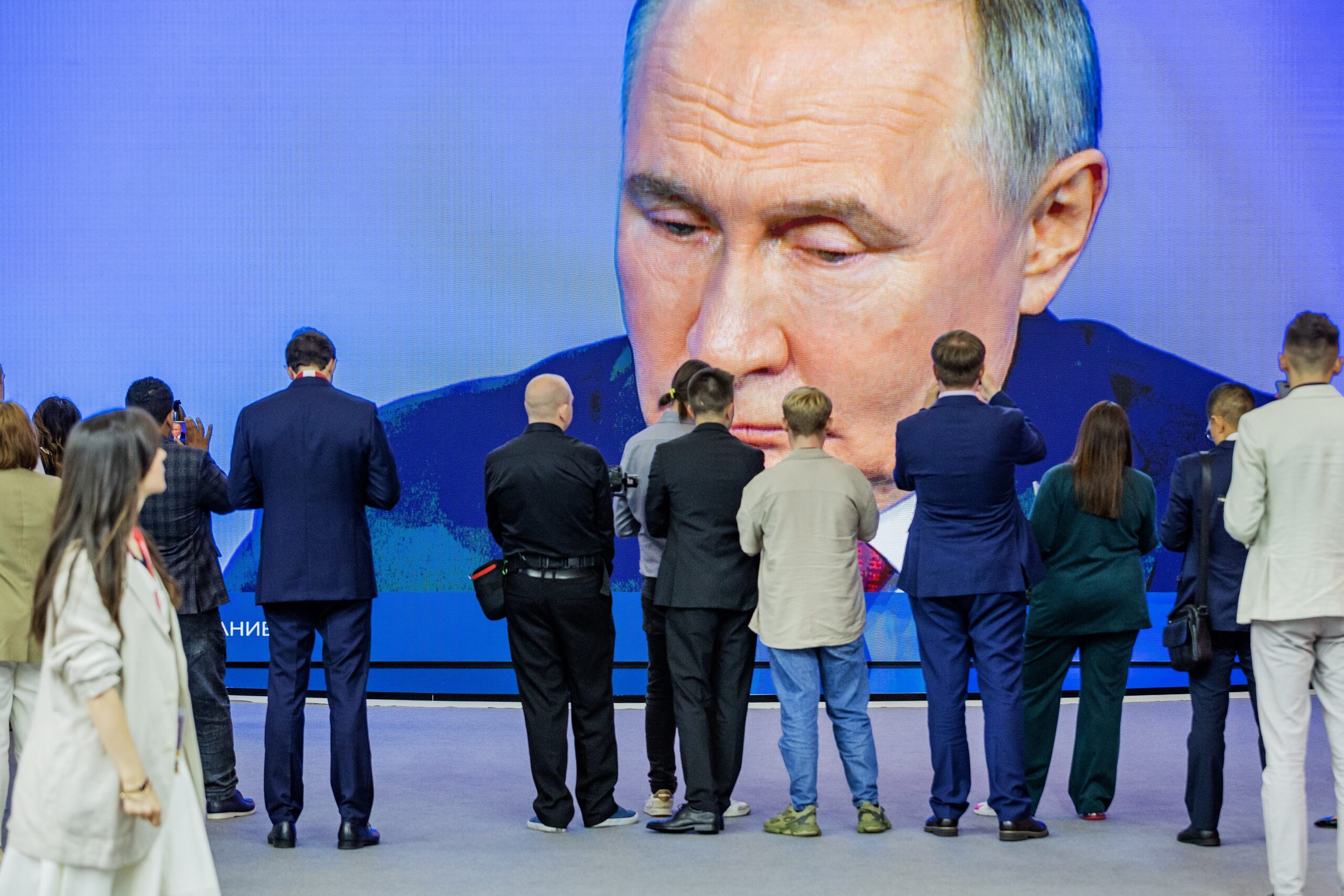
State propaganda tools
Do you want to see more of Andrzej’s drawings? Check out our dedicated gallery page featuring his cartoons here.