
DEAR READER,
This week marks four years since Russia launched its full-scale invasion of Ukraine. This year, instead of repeating the usual debates regarding the geopolitical analyses, we decided to look at the human side of the war. What does resilience look like after four years? And what happens when resilience turns into fatigue? Our main story by Vladyslav Faraponov and Anastasiia Rudenko focuses on the psychological toll, the quiet social shifts, and the everyday dilemmas Ukrainians face as the war drags on.
Also, a quick note: our latest issue, Europe in the new disorder, is now out. It’s available to our members. And if you’re not one yet, you know what to do (just click the link).
Enjoy reading this week’s “brief”!
— Giorgi Beroshvili, Editor

Episode 255: Ukraine. Four years of resistance. Part 1. Guest: Marichka
TOP STORIES OF THE WEEK
🇧🇦 Sarajevo protesters demand accountability after fatal tram crash. Protesters gathered in Sarajevo for a sixth straight day on Wednesday, demanding accountability over a tram accident that killed 23-year-old Erdoan Morankić and seriously injured several others, including a high school student who lost a leg. The crash occurred on 12 February when a speeding tram derailed and struck a station. Public anger prompted the resignation of Sarajevo Canton Prime Minister Nihad Uk, who said young people’s voices mattered more than his position. The government is now in a technical mandate. Senad Mujagic, head of the city’s public transport company GRAS, also stepped down but defended the tram’s technical condition. Demonstrators rallied near the National Museum of Bosnia and Herzegovina and the cantonal government building, calling for a transparent investigation, the withdrawal of unsafe vehicles and systemic accountability at GRAS. The Sarajevo Canton Prosecutor’s Office said the investigation is ongoing, focusing in particular on the tram’s technical condition.
🇺🇸 / 🇷🇺 Trump extends Russia sanctions. US President Donald Trump has extended US sanctions on Russia for another year, citing Moscow’s annexation of Crimea, its war in Donbas and the full-scale invasion of Ukraine. Washington said Russia’s actions remain “an unusual and extraordinary threat” to US national security and foreign policy. The sanctions target associates of President Vladimir Putin, oligarchs and senior officials, while also imposing sectoral restrictions on technology, finance, energy equipment and sovereign debt transactions. According to United24, sanctions have pushed Russia’s trade exposure to its lowest level in more than three decades, with exports and imports as a share of GDP declining sharply in 2025. Economist Olga Belenkaya of Finam described export levels as an “absolute minimum” in modern Russian history. David O’Sullivan, the EU’s sanctions envoy, said Western measures are having a significant impact but warned they are not a “silver bullet” and remain vulnerable to circumvention. Meanwhile, two intelligence officials told Reuters that Moscow may be seeking to separate peace talks from discussions on potential US-Russia economic cooperation, including sanctions relief. Ukrainian President Volodymyr Zelensky has previously claimed negotiators discussed possible cooperation deals allegedly proposed by Russian envoy Kirill Dmitriev. European intelligence officials say they see little indication that Moscow is ready to compromise on its core objectives, warning of mounting financial risks for Russia in late 2026.
🇵🇱 Poland ends special legal status for Ukrainian refugees. President Karol Nawrocki signed a law ending the special status granted to Ukrainian refugees after Russia’s 2022 invasion, placing them under the same legal framework as other foreigners. The special measures, introduced following Russia’s full-scale invasion of Ukraine, had simplified access to residence, work, benefits and education. Nearly one million Ukrainians remain in Poland. The government says the changes will create a single, coherent system for all foreigners under EU temporary protection. The new law, effective 5 March, extends legal stay rights until 4 March 2027 but ends several privileges. Refugees without health insurance will be treated like uninsured Polish citizens, with exceptions for vulnerable groups. Special school support measures and preferential business rules will be phased out, while accommodation and food aid will be limited to the most vulnerable. Ukrainians seeking temporary protection must now register for a PESEL identification number within 30 days or risk losing protection status. Nawrocki said Poland had shown solidarity at the start of the war but argued that “unconditional privileges” had created inequality, adding that future assistance must be balanced with responsibility and protection of the Polish labour market.
🇭🇺 Hungary blocks new EU sanctions over halted oil supplies. Prime Minister Viktor Orbán confirmed Budapest would not support the new sanctions package or the disbursement of a €90 billion EU loan to Ukraine until transit supplies are restored. Deliveries to Hungary and Slovakia were halted in late January, with Kyiv blaming a Russian drone strike on the Druzhba pipeline. Foreign Minister Péter Szijjártó also raised concerns about electricity exports to Ukraine, noting that nearly half of Kyiv’s imported electricity comes from Hungary. Slovakia’s Prime Minister Robert Fico similarly warned he could halt emergency power supplies if oil transit is not resumed. Ukraine’s Foreign Ministry rejected what it called “ultimatums and blackmail”, arguing that suspending energy cooperation during intensified Russian strikes on its power grid threatens regional energy security and plays “into the hands of the aggressor”. While most EU states have cut Russian energy imports since 2022, Hungary and Slovakia continue to rely heavily on Russian oil and gas under temporary EU exemptions. Orbán has repeatedly opposed tougher sanctions on Moscow, arguing that cutting Russian fossil fuels would severely damage Hungary’s economy.
🇷🇸 Dozens arrested as clashes erupt at Belgrade protest. Police detained dozens of students late Tuesday after breaking up a protest in Usce Park in Belgrade, according to organisers from the University of Belgrade. Student group Students in Blockade said officers in riot gear chased and arrested demonstrators on nearby streets after the rally ended. Authorities have not confirmed the number detained. The protest followed reported violence at a rally in Novi Sad outside the Serbian National Theatre, where masked men allegedly attacked protesters. President Aleksandar Vucic suggested government supporters had reacted after being confronted. The demonstrations are part of ongoing nationwide protests sparked by the fatal 2024 Novi Sad railway station collapse.
A MESSAGE FROM OUR PARTNER
The Future of Tech. One Daily News Briefing.

AI is moving faster than any other technology cycle in history. New models. New tools. New claims. New noise.
Most people feel like they’re behind. But the people that don’t, aren’t smarter. They’re just better informed.
Forward Future is a daily news briefing for people who want clarity, not hype. In one concise newsletter each day, you’ll get the most important AI and tech developments, learn why they matter, and what they signal about what’s coming next.
We cover real product launches, model updates, policy shifts, and industry moves shaping how AI actually gets built, adopted, and regulated. Written for operators, builders, leaders, and anyone who wants to sound sharp when AI comes up in the meeting.
It takes about five minutes to read, but the edge lasts all day.
EXPERT OPINION
What did Russia and Ukraine achieve in four years of brutal war?

When Russia launched its full-scale invasion of Ukraine four years ago, much of the world was stunned. The deliberate targeting of civilians in an attempt to force territorial concessions seemed both brutal and strategically irrational. Yet the Kremlin proceeded with the so-called special military operation. While Putin’s initial calculations proved deeply flawed, the war has fundamentally reshaped Ukraine, Europe, the United States and the global order itself.
Ukraine was already close politically and economically to Europe before 2022. Still the key message that Ukraine tries to convey to Europeans is that the war is in Europe and against Europe. If Europeans still insist that this horrible war is distant and refuse understand the reality, then Russia’s open and hybrid aggression against it will only increase. You cannot pretend to not be eaten by a tiger if he is already eating your arm.
It is only due to bravery and ingenuity of the Ukrainian armed forces who defend Europe so missiles and drones don’t land on European territory regularly. In the first months of the full-scale invasion, Ukraine somewhat unexpectedly applied for membership in the European Union. An idea closely associated with the Revolution of Dignity, when president Viktor Yanukovych refused to sign the Association Agreement with the EU, and meant a great deal to Ukrainians. Ukraine’s application didn’t ease the suffering of the war, but provided a chance to believe that all of the years of trauma due to Russian aggression was not pointless. The EU granted Ukraine candidate status in June of 2022 and Kyiv now expects a fast-track accession in 2027, according to President Volodymyr Zelenskyy.
One may say that Ukrainians did not really have much faith in European support in the first years of the war. Although as time passed – with Russian drones falling not only on Ukrainian land but provocations in Europe growing – Europe became a true partner for Ukraine in military and other aid. And this is not to mention the huge difference in approaches of US policy which emerged after Donald Trump replaced Joe Biden in Washington.
According to February 2026 estimates of the Kiel Institute for the World Economy, EU member states’ military aid to Ukraine rose by almost 70 per cent compared to 2022-2024, this is in addition to non-military aid increasing by roughly 60 per cent. The reality behind that tendency is a small number of countries supporting Ukraine militarily, and financial aid coming from the EU institutions, for which Kyiv is grateful.
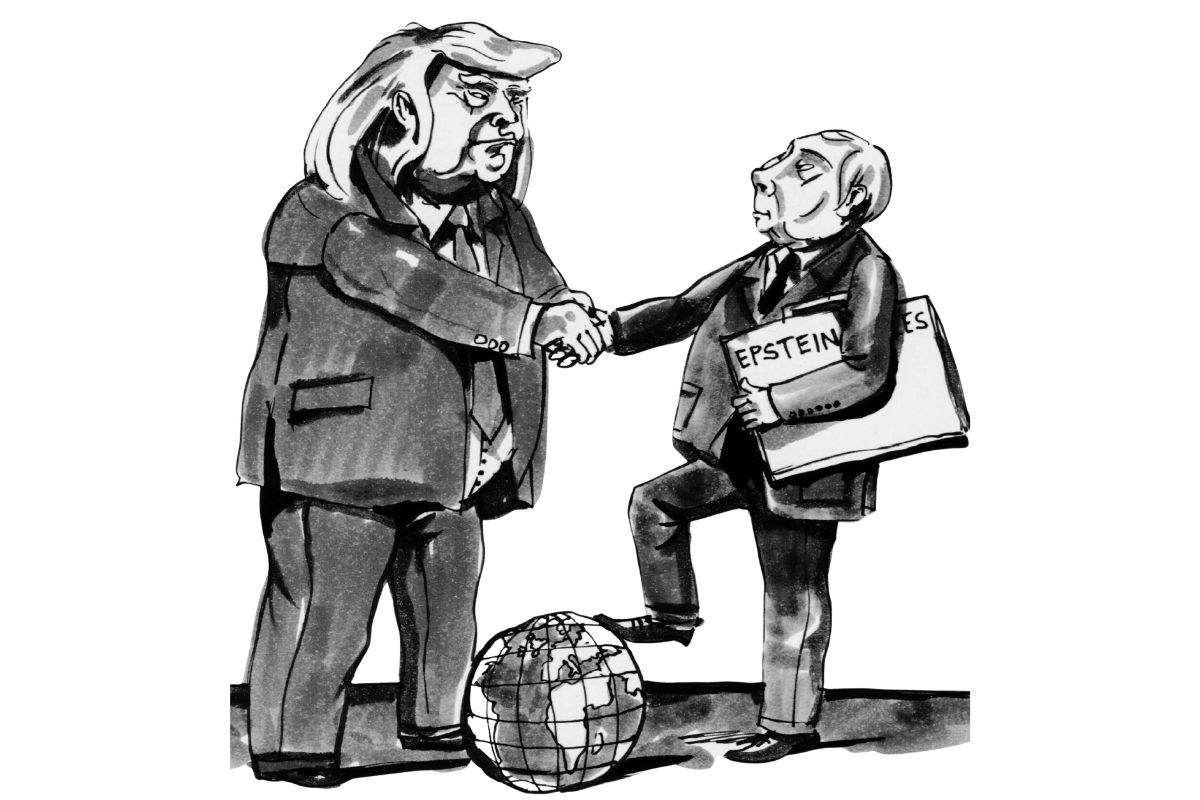
Ukraine watches how Putin’s manipulation works on Trump.
The Biden Administration took the notable, and once criticized approach, of support Ukraine for “as long as it takes”. Many in Ukraine at the time saw this idea as a non-concrete and too general, which would not allow Ukraine to win. However, the idea of supplemental packages from Congress, which made Ukraine feel more secure and indeed stronger on the battlefield was enough to sustain, but not enough to regain the initiative.
It is clear from events in Ukraine that Putin’s strategy is to exhaust Ukraine’s partners. Constant reports of victims and destruction wear down public attention and political will. President Trump’s efforts to bring Putin to the negotiating table are appreciated. However, they seem to rest on the assumption that all leaders are primarily concerned with their country’s welfare and their standing at home. Putin is neither guided by such considerations nor constrained by them, and Ukrainians are paying the price for this misunderstanding. Over the past 25 years, several American presidents have attempted to engage Putin as a difficult but rational rival. In reality, he regards them not as rivals but as enemies, speaking a foreign language, even when no interpreter is present.
What is crucial for Ukraine is that President Trump has, at least rhetorically, acknowledged the need to provide security guarantees. From the Ukrainian perspective, the issue is straightforward. If the West wishes to resume business as usual with Russia, Kyiv will not stand in the way. But security must come first. Without it the European, transatlantic, and American assistance of the past four years would be rendered meaningless.
How has Ukrainian society changed in the four years?
Even the most resilient people grow tired of having no control over their own lives. Ukrainians remain largely positive, known for their sense of humour and their aspiration to re-join Europe and the broader civilized world. Russia, by contrast, seeks to reduce Ukraine to a place where it can stage medieval aggression and impose an authoritarian worldview.
A recent Facebook post by a woman in Kharkiv, Ukraine’s second-largest city, captured this exhaustion. She wrote that she felt saddened when, after yet another strike, people once again praised “unbroken Ukrainians.” Kharkiv, like many cities in the east and south, can hardly be compared to its former self. Ukrainians do appear increasingly frustrated. They understand the immense potential their country holds, and they see how Russia tries to buy time and prolong the war.
It is also important to point out that soldiers and civilians are dying not only from direct attacks. The psychological and mental toll is profound and increasingly visible.
The war has also cut straight through people’s private lives. Many speak of a surge in divorces. Families have been physically separated for months or even years: someone joins the army and cannot see their loved ones; women and children leave for safety abroad; home becomes a long-distance relationship with no clear end date. And yet, alongside this exhaustion, there is a stubborn countercurrent. Many have chosen not to postpone marriages or children, saying that bringing new life into the world is their answer to the darkness Russia continues to sow.
Some joke that half the country lives with post-traumatic stress and the other half simply refuses to acknowledge it. But even when people don’t use clinical words, you can see the symptoms in the smallest things: in how we react to sounds, how we sleep, how we hold our breath during “quiet” nights, how we avoid imagining the future because it feels like tempting fate.
At the same time, Ukrainians are trapped in a dilemma that has no morally comfortable solution: support the economy or support the armed forces directly especially for men. Not everyone is capable of fighting on the frontline, and not everyone should be there: someone must teach our children, work in the government, keep hospitals running, keep cities and villages alive – including Kharkiv and the countless smaller communities that rarely make headlines. Otherwise, Ukraine risks looking like it is fighting for land, not for the people who are meant to live on it.
Ukrainians and their leadership may sound and indeed are sceptical of the peace negotiations, not because they do not want peace, but because they have learned from experience that fragile agreements serve as an invitation for further aggression.
It is clear and simple: Ukraine already had many talks with Russians from 2014 and yet it is Russia that is obsessed with Ukraine and who attacks civilians even during the peace negotiations.
The authors dedicate this text to their son, who was born in the third year of the full-scale war.
— Vladyslav Faraponov, President of Kyiv-based Institute of American Studies & Anastasiia Rudenko, Editor in Chief of Rubryka

As a member of New Eastern Europe, you will enjoy unlimited access to premium articles, our full archive, downloadable PDF issues, and our podcast. Choose digital-only or add print delivery, and join a community that values independent, in-depth analysis.
OPPORTUNITY OF THE WEEK
University of Oxford — Oxford AI and Media Policy Summer Institute — A two-week intensive programme at Jesus College, Oxford exploring the evolving relationship between sovereignty, multilateral cooperation, and digital governance. Under the 2026 theme “Governing AI and Media in a World Between Orders: From Sovereignty to Multilateral Cooperation,” the Institute examines how legal and institutional foundations of technology and media policy are being reshaped amid global uncertainty.
Participants will engage in interdisciplinary discussions on platform governance, content regulation, AI supply chains, sovereign AI, cross-border data architectures, and the geopolitical dimensions of digital infrastructure. Case studies will span diverse global contexts, with attention to both European regulatory developments and Global South perspectives. The programme brings together academics and leaders from policy, government, civil society, and industry, fostering rigorous debate and international exchange within Oxford’s academic community.
Early decision deadline: 14 March 2026. Final application deadline: 21 April 2026. Early applications are encouraged, particularly for those requiring a UK visa. Apply online.
ARTICLES OF THE WEEK
CARTOON OF THE WEEK

Prussia’s forgotten heritage
Do you want to see more of Andrzej’s drawings? Check out our dedicated gallery page featuring his cartoons here.